

One stack, several separate chimneys
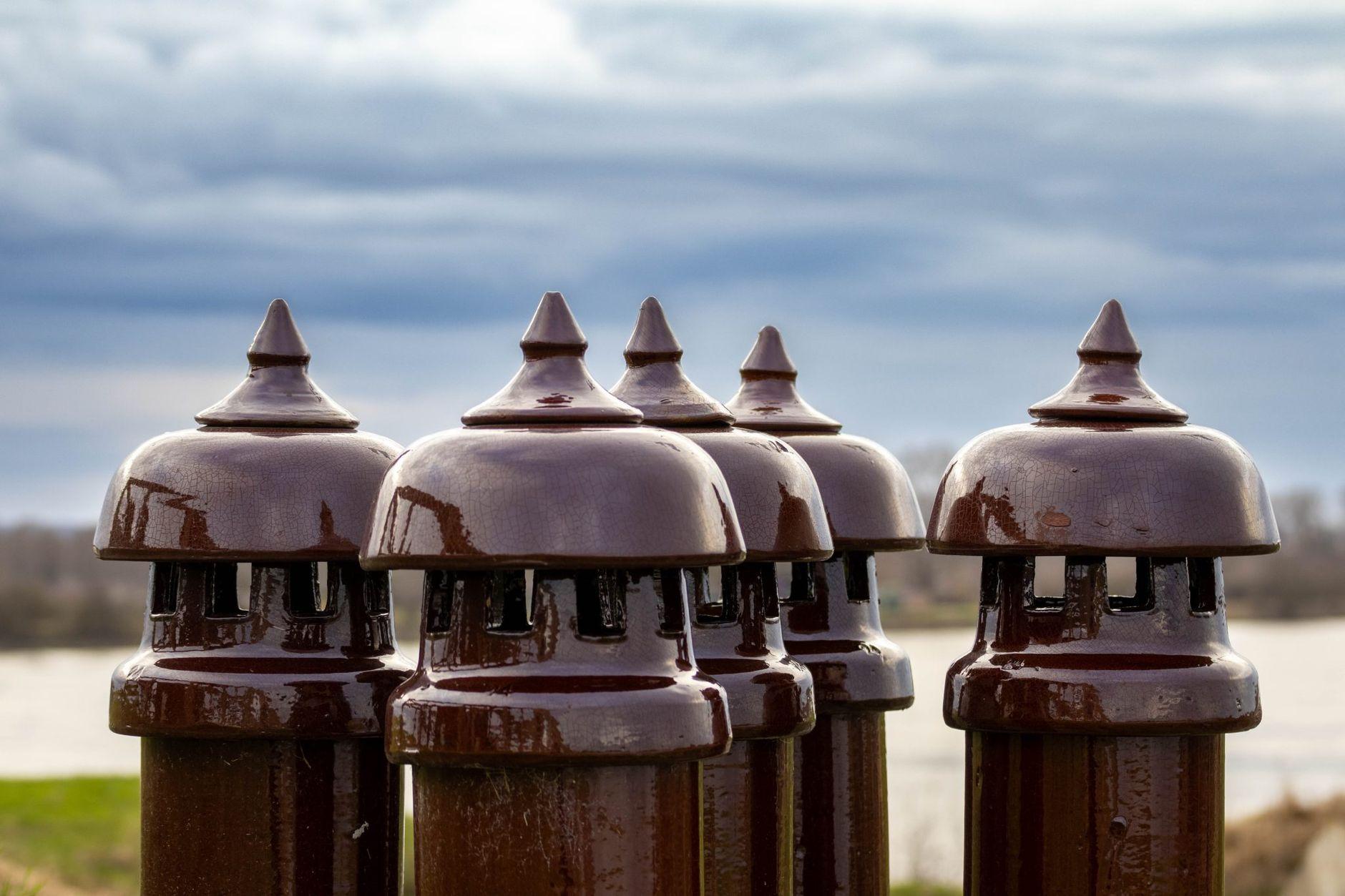
From the street, a wide brick chimney on an older Los Angeles fourplex looks like a single thing. From the roof you can see two, three or four flue tiles sticking up through the crown. Each is a separate passage serving a separate fireplace, often in a separate unit, sometimes with a water heater or furnace on one of them. When a camera inspection finds a cracked tile in one passage, the question is not whether the chimney needs a liner, but which flues need one and which can be left alone.
What the camera shows in a shared stack
A Level 2 inspection, $405 per flue, records each passage on its own. In a shared stack we look for:
- Cracked or broken tiles in the passage itself.
- Missing mortar at the joints between tiles, where smoke escapes into the brick.
- The divider between flues. In older buildings it is sometimes a single thin course of brick, or nothing at all. If it is cracked, smoke from one fireplace can come out in the next unit.
- Shifted tiles after shaking, which leave a step inside the passage.
- Unlined sections, common in stacks built before clay tiles became standard.
Each flue gets its own finding and its own recommendation, filed under the unit it serves.
Why one bad flue does not condemn the rest
Owners are sometimes told that if one flue needs a liner, the whole stack must be relined. Sometimes that is right: when the dividers between flues have failed, lining only one leaves smoke a path into the others. Often it is wrong. A flue with whole tiles and sound joints can stay as it is, and its record says so. We give a separate recommendation per flue, with the reason. That call rests on what the video shows of the dividers, so the stills of each divider go into the records of both flues it separates.
Relining inside a crowded stack
A stainless steel liner is sized to the appliance it serves and runs the full height of the flue. The hard part in a shared stack is space. Older flues are often narrow or out of square, and the liner has to fit without forcing tiles apart. Sometimes an oval liner suits the opening; sometimes the flue has to be enlarged. At the top, each lined flue needs its own termination and a cap that keeps rain out without trapping smoke from the flue beside it. One wide cap over the whole crown is common on multi-flue stacks, but its height and screen have to suit every flue under it.
Gas appliances need a liner listed for gas exhaust, and wood fireplaces need one listed for wood heat. A building with mixed fuels in one stack ends up with mixed liners. Our chimney liner installation page covers the materials.
What goes into the written quote
The quote lists every flue on its own:
- Which flue it is, and the unit and fireplace it serves.
- The liner type, diameter and length for that flue.
- Any enlarging needed to fit it.
- The cap or caps at the top.
- Whether the fireplace has to be out of use while the work is under way.
- What happens if a hidden problem shows once work starts.
We do not publish a liner figure, because flue count, height, size and fuel differ so much from one stack to the next. What we do publish is a Level 2 at $405 per flue for the camera before and after the work. A cap is quoted after we measure.
Note in the form above which flues failed and what the report said; we call back to arrange a look at the stack, then put each flue's price on paper.
Working in an occupied building
Relining needs the roof and the fireplace inside the unit. For a tenant, that means a visit to their unit at the start and at the end, with the fireplace out of use in between. We plan the order of flues with the manager so the visits to each unit are grouped, and the tenant notices name the fireplace that will be off. Units on flues that are not being lined carry on as usual; their tenants only see us if the camera needs a second look at a shared divider.
After the liner goes in
Once a flue is lined, the camera runs again and the new video joins that fireplace's record. A buyer, an insurer or a manager then has the before and the after for the same flue. Our page on flue repairs to code covers the other common flue fixes, and chimney inspection cost per unit covers what the camera visits cost across a building.
We reline flues across Los Angeles, including the older brick stacks of San Gabriel and Downey.
Owner questions
Can we line one flue now and the others later? Yes, if the dividers between them are sound. If they are not, the report explains why the flues have to be done together.
Does a lined flue still need yearly inspection? Yes. A liner changes what we look at, not whether we look.
Does relining change the cap? Often. A lined flue usually ends a little higher, or in a different shape, than the old tile, so the cap over it may need adjusting or replacing, and the quote shows which.
Will the water heater flue be affected? Only if its passage shares a failed divider with a fireplace flue. We record it separately either way.
If one flue in your building failed and you want the rest judged on their own condition, bring the address and the inspection report to our contact page.
Responsible for More Than One Fireplace?
Madden Chimney Experts quotes buildings unit by unit and writes up a page for every chimney, so owners, boards and managers in Los Angeles and nearby cities can see each home on its own.